Solarez UV Epoxy

I like to tie my own bucktails because I can select jigs with strong and sharp hooks.  I also like to tie my own bucktails because I can tie custom color patterns.  However, I did not tie them often because of the time it took me to manually turn my jigs while the epoxy cured.  While paper prototyping a motorized device to turn my bucktails (1/4 oz to 5 oz), I decided to try UV epoxy.
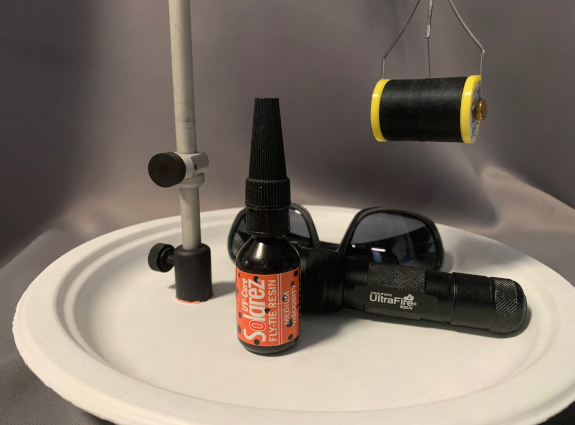
I decided to go with Solarez UV Resin (medium viscosity) and the UltraFire UV Flashlight (with rechargeable Li batteries!).  Whenever working with epoxy, wear plastic gloves!  And when working with UV epoxy, were 100% UV blocking sun glasses.  Even though you are working with a small batches of epoxy, I would highly recommend doing this in a ventilated area.

While wearing a pair of 100% UV blocking sun glasses, focus the UV light on one section for 10 second, and then rotate.  Once cured, the Solarez forms a hard layer that holds and protects the wrapped threads.

The Solarez UV Resin and the UltraFire UV Flashlight allow me to efficiently tie bucktails in half of the time, which is more valuable than the price difference between regular epoxy and UV epoxy.  Time is fish!

Facebooktwitterlinkedin

Exploring New Water

I like to explore new water.  When exploring new bassy water, I tend to seek water accessible only via kayak or tiny boats because these waters tend to have less fishing pressure.  I recently explored an area that I have never fished before.

I paddled into the area and fished every stump, laydown, cut, and point.  I fan casted the entire open water.  No bites!  No bumps!!  No evidence of life!!!  After one hour, I paddled out into the main river and made my way towards an area that I have fished in years past with spinner baits and jigs.  I decided to explore this spot with a Senko.  Fish on!

I set out to discover new water and failed to find fish.  Instead, I re-discovered old water and found fish.  I am looking forward to re-discovering old spots with new presentations.

Facebooktwitterlinkedin

Sloppy Frogging

The slop is one of my most productive frog patterns.  Fishing this pattern can be intimidating because the fish can be anywhere at any time.  This pattern can produce frustration, fish, and everything in between.

Fish360 Sloppy Frogging

Slop is a layer of organic “stuff” that is formed from grass beds below the water’s surface.  This layer blocks the sun and consequently kills the grass below, which creates waterways for fish to travel.  Fish freely travel these waterways because they feel protected by the cover above.

Fish360 Sloppy Frogging

I like to fish this pattern from my kayak because it provides maximum stealth.  I paddle (quietly) to a spot before the edge of the slop.  I deploy my DIY pole anchor.  I aim my rod to 12 O’clock, cast towards the bank, and slowly retrieve my frog to create a V-wake.  I then makes casts to 1 O’clock, 2 O’clock, 11 O’clock, and 10 O’clock.  If after these five casts, I get no blow ups or hits, I move and repeat until I find fish.  I consider this is a power-finesse method because I cover a lot of water via slow retrieve.  The bumps can be subtle and the bites can be explosive.  On my last trip, I had a fish engulf my KVD Sexy Frog as it jumped completely out of the water!  The visual memory of that fish in flight still triggers my adrenaline!

Fish360 Sloppy Frogging

The next time you are out on the water, apply this method on a slop. Be patient. Keep eye-to-frog contact. And you will catch more fish, and less frustration.

Facebooktwitterlinkedin

The Striped Bass 60+ Pound Club

Catching a 50 pound striped bass is like winning the gold at that the Olympics.  There are thousands of anglers with this 50 pound striped bass gold medal.  Interestingly, there are just over 100 anglers with a recorded striped bass over 60 pounds!  Tony Checko tells the stories of some members in this exclusive club in his book The striped bass 60+ Pound Club.

In addition to the 15 epic stories of 60+ pound fish, Tony Chemo has packed the covers of his book with practical fishing information:

  • Fishy Websites on Striped bass
  • Hot Spots for Striped bass
  • Best spots and times to hunt trophy Striped bass based on the historical record
  • Tips from Trophy Striper Hunters
  • Conservation Challenges
  • IGFA Weighing Stations

Experience is the best teacher.  You can learn from your experience.  You can also learn from other anglers’ experiences.  If you want to gain years of knowledge in hours, then read The striped bass 60+ Pound Club by Tony Checko.

Facebooktwitterlinkedin

DIY Sliding Bobber

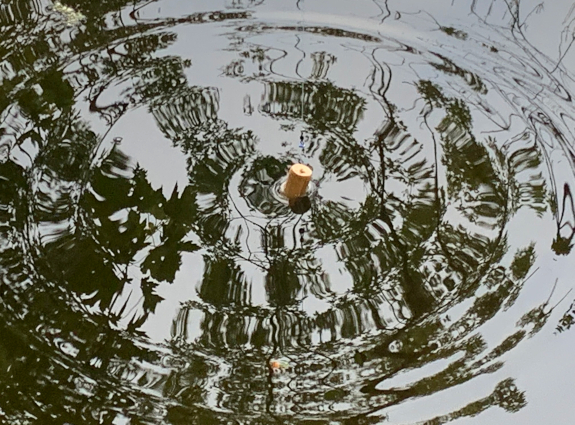
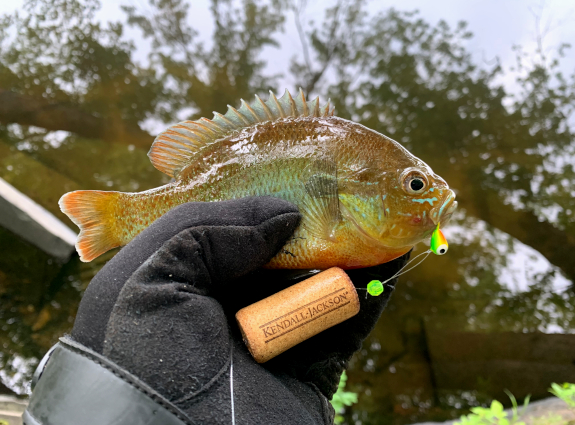
Several years ago I made a DIY Bobber from a wine bottle cork.  This durable and low cost DIY Bobber casts better than a traditional spherical bobber and it catches fish! I was recently fishing a spot where the fish were beyond my cast.  With some simple tools and a plastic tube, I created a DIY Sliding Bobber.

Fish360 DIY Sliding Bobber

Making your own sliding bobber is easy.  First, drill a hole through the center of a wine bottle cork with a power drill and a drill bit with the diameter of the plastic tube that you are going to use.  Second, cut and insert the plastic tube.  (I used the empty ink tube from a ball point pen.)  Add lastly, add a bobber stop to you line, insert the line into the bobber, add a plastic bead or a another boober stop, and tie your jig or hook.

Fish360 DIY Sliding Bobber

A sliding bobber will out cast a fixed bobber because all the weight is at the end of the line, which has better aerodynamics.  When the bobber hits the water, the jig sinks— which pulls the line through the bobber until the bobber stop.

Fish360 DIY Sliding Bobber

The DIY Sliding Bobber is now my go-to rig for bobbing because its low cost, durable, long casting, and incredibly effective at catching fish.  Thankfully, I have a life-time supply of wine bottle corks that I inherited from my late F.I.L..


Facebooktwitterlinkedin

Frabill Bear Claw Kayak Fishing Net

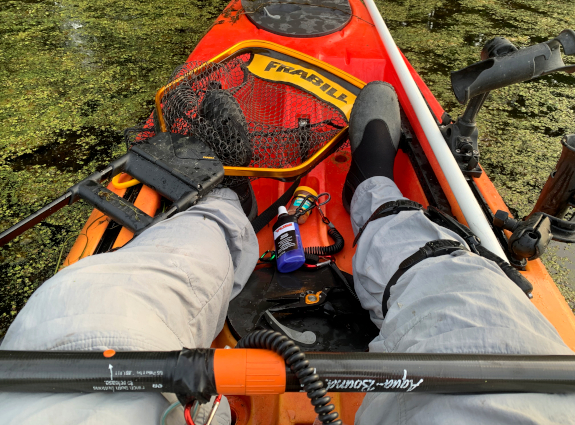
When targeting largemouth and smallmouth bass via kayak, I use to hoist fish up and over into my kayak; until one day a hefty largemouth bass snapped my rod!  I then started bringing the fish along the side of my kayak, lip-grip them with my free hand and pull them into my kayak.  Last season I hook a monst’ah!  The fish was not only pulling drag, it was towing my kayak!  When I got the fish to the side of my kayak, I decided to preserve my digits and hoist the lengthy pickerel into my kayak.  Thankfully, my St. Croix rod did not break like my previous brand-x rod.  While I was trying to negotiate a secure grip on the slippery fish as it was twerking, it unhooked itself and jumped back into the water!

Fish360 Frabill Bear Claw Net

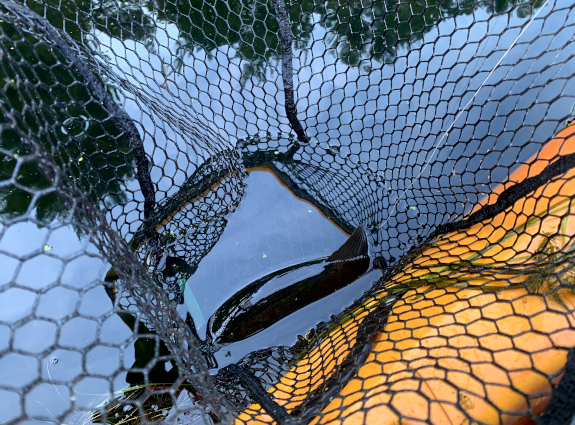
After a broken rod and a lost fish, I decided to investment in a fishing net.  After searching to the last page of the Internet, I purchased the Frabill Bear Claw fishing net.  I like the large hoop (14″ W x 18″ L x 11″ D) and the integrated LED lights. I LOVE the one-handed design.  The fish slid right into the net with ease, thanks to asymmetrical flat-bottom design.

Fish360 Frabill Bear Claw Net

I still wake up in the middle of night with the image of that 3+ pound monst’ah pickerel jumping out of my kayak before I could take a picture.  If you kayak fish, then get the Frabill Bear Claw fishing net to save your rods, land fish, and sleep without haunting images of lost fish. 😉

Facebooktwitterlinkedin

Frabill 120 Volt Adaptor

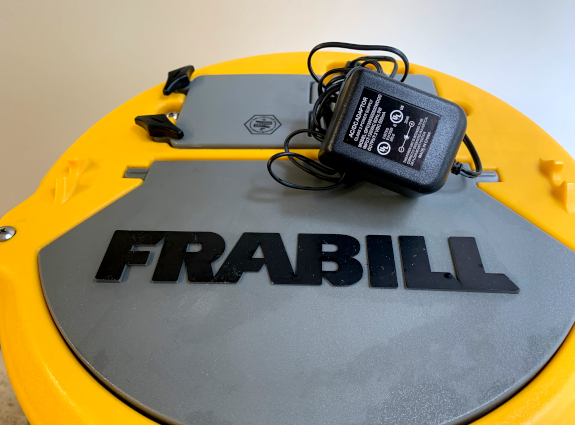
Several years ago I invested in a Frabil Aqualife Bait Station, which I use to store and transport shiners when I am ice fishing and American Eels or shiners during the spring, summer, and fall months when I am targeting striped bass and lake trout.  The Frabil Aqualife Bait Station comes with automotive adaptor to power you unit while on your boat and driving to and from spots.  To extend the utility of my Frabil Aqualife Bait Station, I recently purchased the Frabill 120 Volt Adaptor so that I can $ave on batteries and reduce my environmental impact.

Fish360 Frabill 120 Volt Adaptor

The Frabill 120 Volt Adaptor is compatible with several Frabill live well models (1435, 1437, 1409, 1469, 14351, 14371, 14691) and aerators (1435, 1437, 1469).  The 18 inch power cord is an optimal length to plug your Frabill 120 Volt Adaptor into an outlet.

With rising costs of batteries (partially COVID-19 induced), the Frabill 120 Volt Adaptor will pay for itself!  If you have a Frabil Aqualife Bait Station, buy one.  If you are buying a Frabil Aqualife Bait Station, then buy one at the same time!

Facebooktwitterlinkedin

COVID-19

COVID-19
You crossed our borders
Under the blanket of night
Without invitation

COVID-19
You caused travel bans
And the TP Shortage of 2020

COVID-19
You separated families
You gave pain
And lonely death
Without funeral

COVID-19
You selected the wrong species
We adapt
We mask up
We social distance

COVID-19
You selected the wrong species
Our Doctors and Nurses responded without restraint
Our First Responders answered each call with urgency
Our Essential Workers drove our socio-economic machinery
Our Scientists developed vaccines
Our Elected Leaders collaborated
Our Businesses rewarded our heroes

COVID-19
You impacted my fishing
Hades comes for thee
R.I.P.

Facebooktwitterlinkedin

DIY Leader Wallet on Neck Lanyard

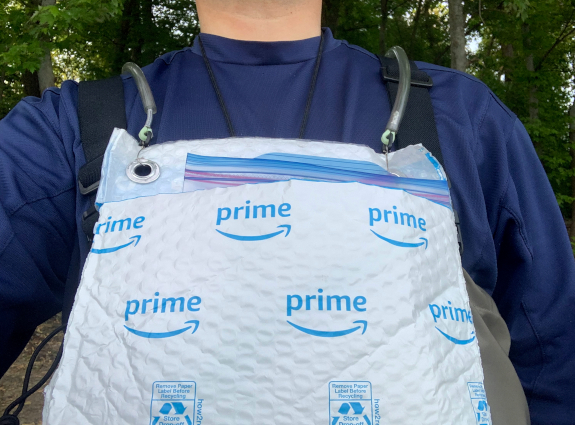
When I am Freshwater Surfcasting, I keep my gear and rigging minimal and simple. I pre-tie all my leaders and rigs for quick exchanges.  While fishing, I store my leaders and rigs in my leader wallet on neck lanyard.

Fish360 DIY Leader Wallet on Neck Lanyard

Making your own leader wallet with a neck lanyard is easy.  You only need a recycled bobble wrap shipping bag, a pair of scissors, a Sharpie, two grommets, and a neck lanyard.

First cut a two inch deep strip from the bobble wrap shipping bag.  Second, mark the placement of the grommets via Sharpie and cut out the holes to accommodate your grommets.  Third, mount your grommets with the crushed end facing the opening of the leader wallet so that they do not grab your clothing.  And finally, mount your neck lanyard.

I have field tested this low cost leader and rig storage solution while targeting American Shad.  I found it effective and efficient. Time is fish!

Facebooktwitterlinkedin

American Shad: C.P.R

Today I had the opportunity to fish for American Shad on a specific stretch of the Merrimack River. On each shad trip, I adapt based on what I learned on my previous trip. On my last shad trip, I landed a monst’ah shad— which unhooked itself at my feet! I nearly lost the fish. On today’s trip, I tested a new method to safely capture, photograph, and release (C.P.R.) American shad.

I used my The Bear Claw fishing net to contain my catch. This method reduced oral and dermal damage to the fish. If you have a net and you are targeting American Shad from the river bank, bring it on your next trip.

Facebooktwitterlinkedin