Ice Fishing Patterns

I arrived at BIP Outdoors at 6:30 AM this morning to buy some lively shiners and jigs. This was my first time in BIP Outdoors. I was impressed with the live well system and the ice fishing tackle. With no time to waste, I was drilling holes by 7:00 AM. The ice was 12 inches thick with 6 inches of slush. The air temperature was 62 degrees. And the fog was thick. I have never ice fished under these conditions.

Fish360 Ice Fishing 2017 BIP Outdoors

Using my Jiffy Pro4 auger, I drilled a set holes in a straight line from near the shoreline towards the center of the lake. I drilled a second set of holes parallel to these holes a short sprint away. This proven pattern allows me to fish the entire water column and cover a wide area.

I rigged my Jacks Traps tip-ups with shiners and set them up on the first set of holes. My first fish was a black crappie. My second fish was a yellow perch. And then swam in the pickerel! My first pickerel weighed 1 lb 9 oz. My second pickerel weighed 2 lb 2 oz. And my third pickerel weighed 2 lbs and 7 oz. This fish was so powerful, it move the entire tip-up!
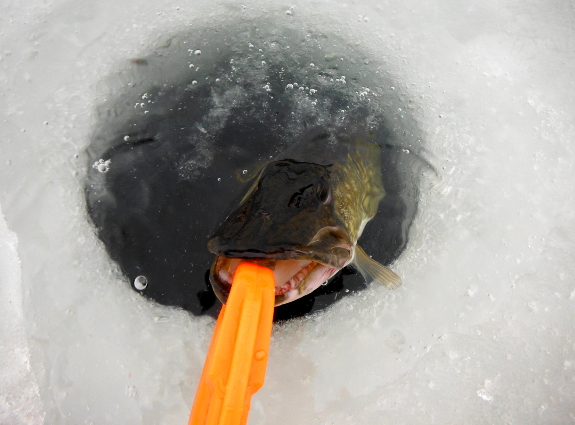
Fish360 Ice Fishing 2017 Chain Pickerel

After each pickerel, I quickly replaced my 10 lb fluorocarbon rigs by slipping the Tactical Anglers power clip off and on the swivel secured to the tip-up line via Palomar knot. Tying knots on the water is slow. Tying knots when your hands are cold and the wind is blowing is even slower! Time is fish!! Re-rig via swivel and clip!!!
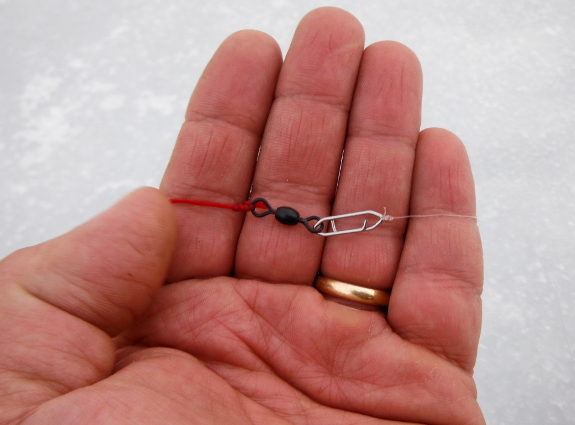
Fish360 Ice Fishing 2017 Ice Fishing Re-Rigging

With my tip-ups in my peripheral view, I jigged the second set of holes from shallow to deep and back again. My first fish on the Eurotackle tungsten ice jig was a ferocious yellow perch. This presentation hooked several more perch and sun fish.

Fish360 Ice Fishing 2017 Yellow Perch

This was my first time on this lake. This was my first time ice fishing under these conditions. I exploited a pattern from my fishing journal and caught fish. Fishing patterns will help you hook fish! But, good gear and technique will help you land fish!! Go fish!! 😉

Facebooktwitterlinkedin

DIY Jig Crate

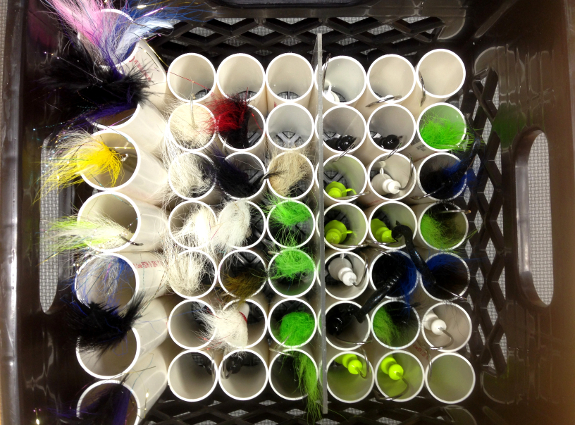
Jigs (bucktails and metals) allow anglers to work the entire water column for a multitude of species in freshwater and saltwater. Their versatility is virtually un-matched. Fishing them is easy. Storing them is not so easy. Hence, my inspiration to develop a jig crate.

Fish360 DIY Jig Create

Making your own jig crate is easy. The only materials you need are 1.5″ diameter SDR PVC pipe and a milk crate. The tools you need are a miter saw, a tape measure, and a pair of safety glasses.

The first step is to cut the jig tubes. The length of the jig tubes depends on the type of jigs you want to store. I use 4.5″ lengths for my bucktail jigs and 6″ and 8″ lengths for my metal jigs. A milk create will store 49 1.5″ diameter jig tubes evenly. That’s 49 cuts! I use a piece of 2″ x 4″ stock as a guide/stop so that I cut the jig tubes at the respective length and save time measuring.

Fish360 DIY Jig Create

Once all the jig tubes are cut, insert them into the milk create. You can use a 11.5″ long piece of plexiglas to sub-divide and organize the jigs, like you would sub-divide a Plano box. I like to separate my surf bucktails from my canal buck tails.

Alternatively, you can use a jig crate specifically for surf bucktails (1/2 oz to 4 oz) and thin profile jigs using 1″ diameter SDR PVC pipe. A milk create will store 81 1″ diameter tubes evenly! That’s 81 cuts!! Use a piece of 2″ x 4″ stock as a guide/stop!!!

Fish360 DIY Jig Create
Building your own low-cost jig crate gives you a versatile storage solution. You can organize you jigs by size, color, type, or application. You can also stack your jig crates to minimize their foot print. Your jigs are versatile. Your jig storage should also be versatile! 😉

Facebooktwitterlinkedin

DIY Fly Box

I target fish via fly in freshwater and saltwater. In calm and in gear-breaking conditions. I cast small and BIG flies. Hence, I created my own fly box.

Fish360 DIY Fly Box

Making your own fly box is easy. All you need is:

  1. Plano water-proof box without any internal dividers
  2. Styrofoam (recycled or from a craft store like Michael’s)
  3. Ruler
  4. Permanent Marker
  5. Scissors

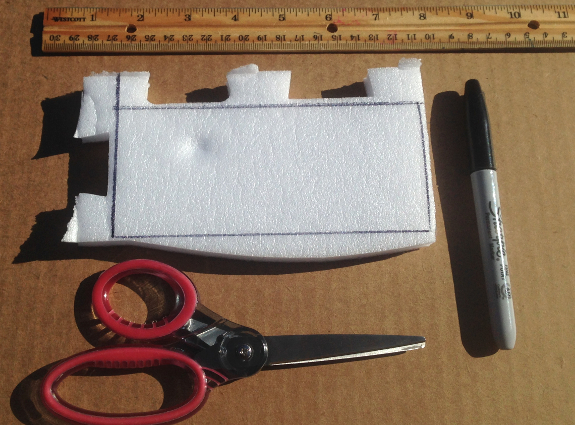
Measure the interior width and length of the Plano box. Mark the styrofoam with the measured width and length via permanent marker. Using the scissors, cut the styrofoam outside the lines. Insert the styrofoam rectangle inside the box and trim as required. The styrofoam needs to be slightly wider and longer than the interior of the Plano box so that it pushes against the sides and thus does not fall out when you open the box.  For additional security, use super glue or epoxy to permanently mount the styrofoam to the bottom of the Plano box.

Fish360 DIY Fly Box

This inexpensive fly box is feature rich. It can hold more flies than I can fish in a single trip or tide. The internal volume allows for flies with big hooks. The hard outer shell can take abuse from extreme conditions. The rubber gasket and three latches keep my flies dry. Now that’s fishconomic!

Facebooktwitterlinkedin

Owner Longshank Hooks

The Owner long shank hooks are traditionally used for rigging bait fish.  BUT! They work exceptional well for rigging large soft plastic baits; particularly long and large profile swim baits (a.k.a “paddle tails” or “swim shads”).

Owner Longshank Hook Swim Bait

Large solid soft plastic swimbaits have some buoyancy. To get them to swim consistently below the water’s surface, I add weight. There are a variety of materials that can be used for weight. Chemically speak, tungsten (W, 19.25 g/cm3) is denser than lead (Pb, 11.34 g/cm3). Lead is denser than copper (Cu, 8.96 g/cm3). Copper is denser than steel (C+Fe,7.75 g/cm3). And steel is denser than tin (Sn, 7.31 g/cm3). I use a variety of materials based on depth and regulations.

Owner Longshank Hook Swim Bait

For “shallow” running depths, I use insert weights made from tungsten, lead, or copper.  I secure them to the shank via thread and epoxy. For thread, you can use fly tying thread or recycled braided line. The latter allows you to really tighten the weights to the hook shank.

Owner Longshank Hook Swim Bait

For “deeper” running depths, I use rubber core sinkers made from lead or steel. I remove the rubber core and bore out the channel with a power drill to accommodate the hook shank. Once the hook sits level inside the channel, I clamp the sinker onto the shank of the hook via vice grip pliers.

Owner Longshank Hook Swim Bait

Solid body soft plastic swim baits can easily accommodate the diameter of a hook’s shank.  But, increasing that diameter with weights can cause splitting. Hence, I exploit a power drill and drill bits.

Owner Longshank Hook Swim Bait

I align the Owner long shank hook on the side of the swimbait. I make a mark on the side where the hook starts to bend. I also make a mark where the hook will penetrate from the top of the swimbait.

Owner Longshank Hook Swim Bait

I drill a hole through the nose of swim bait until the point where the hook starts to bend. I then drill a hole a 45 degree angle where the point of the hook will penetrate the top of the swim bait. This channel will allow the hook to be inserted into the swimbait at the exact position. To accommodate the weight’s length and diameter, I enlarge part of the channel using an appropriately sized drill bit.

Owner Longshank Hook Swim Bait

The position of the weights on the shank will alter the action of the swimbait.  Mounting the weights near the eye of the hook will cause the swimbait to head dive and swim with the paddle tail upwards.  Mounting the weights towards the center of the hook will cause the soft plastic to fall and swim level.  Each action has it’s application. I use the former to target fish holding on bottom or near structure. I use the latter to target suspending fish.

Rigging long and large profile soft plastic swimbaits with Owner long shank hooks with various weights (1/16 oz to 1 oz) will allow you to fish them at precise depths in the water column.  Such versatility is unmatched by commercially available swimbaits with embedded weights, which tend to have increasing weight with increasing length.

Facebooktwitterlinkedin

DIY Bobber

A bobber is a great way to present bait at a specific depth below the water’s surface. There are several commercial bobbers on the market in various sizes, geometries, and colors. However, you are not limited to what’s available in the marketplace. With some simple tools and materials, you can make your own bobber to fish a variety of baits in a variety of conditions.

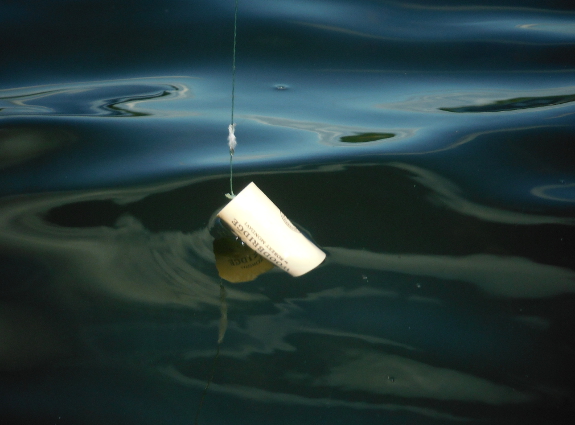
Fish360 DIY Bobber

Materials

  • Wine Bottle Cork
  • Monofilament or flurocarbon
  • Hook
  • Swivel
  • Split shot (optional)

Tools

  • Safety Glasses
  • Line cutter or scissors
  • Rigging Needle (e.g. Carp Bait Needle)
  • Pliers (optional)

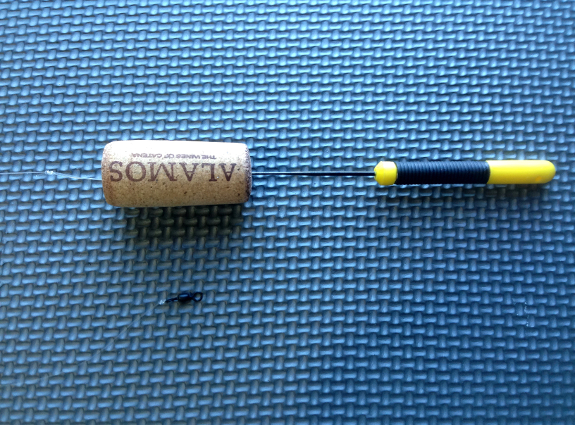
Making your own bobbers is easy. Cut a length of monofilament or flurocarbon to fish your desired depth; be sure to add addition lengths for knots. Tie the length of monofilament or flurocarbon to a swivel via improved clinch knot . Tie a double surgeon’s loop to the other end of the leader. Insert a rigging needle through the enter of a wine bottle cork and hook the loop.

Fishd360 DIY Bobber Part I

Pull the line through the cork until the bottom eye of the swivel touches the cork.  Push bottom eye of the swivel into the cork.  Cut the double surgeons loop knot and tie a hook of your choice via improved clinch knot . Depending on your application, you can add a non-lead split spot.

Fishd360 DIY Bobber Part II

Besides being very low cost (excluding the cost of the wine), the primary advantage of this DIY bobber is that it provides maximum buoyancy with a minimal profile. I personally think that cork has more of a natural look than a red/white plastic sphere. 😉

Facebooktwitterlinkedin

The Fly Fishing Show ~ 2017

The Fly Fishing Show starts next month. What I find interesting about this show is how fishy it is. There are seminars, fly casting demos, exhibitors, fly tying, master anglers, and classes.

The Fly Fishing Show

This is the only show that I know of that is held in multiple cities!

This show also features the The International Fly Fishing Film Festival (IF4). The short films in the IF4 are amazing! The fish are beautiful!! The anglers are unique and distinct!!!

Are you new to fly fishing? Are you looking to take your fly game to the next level? Are you looking for something new to cast or try? Then attend The Fly Fishing Show!

Facebooktwitterlinkedin

Plug Colors

A pedestrian theory on plug colors is that they catch anglers, not fish. I think this theory is wrong. Selecting the right plug color based on the time of year, time of day, depth, and conditions is as important as selecting the size, action, and weight of the plug.

Fish360 Plug Colors

The time of year is important because bait fish populations and migrations are seasonal. Learn what bait fish are in your local waters and when they arrive. Fish colors that complement the swimming bait fish. If there is thick concentration of bait fish, then fish colors that contrast the school of bait fish.

Time of day is key. A proven pattern is light colors by day and dark colors by night. Personally, I tend to favor two-tone color plugs. My day shift plug bag has colors like:

  • Yellow / White
  • Blue / White
  • Green / White
  • Red / White
  • Pink / White
  • Blue Mackerel
  • Green Mackerel

My night shift plug bag has colors like:

  • Black / Yellow
  • Black / Purple
  • Black / Blue
  • Black / Pink
  • Black / Green

The most commonly overlooked parameter by surfcasters is depth. Colors appear different at increasing depths in the water column because light penetration decreases as depth increases. For example, red is not visible as red after 10 feet of water. Hence, my red/white plugs are all top water plugs and my deep swimming plugs have yellow and chartreuse.

Time of day, time of year, and depth are predicable parameters. Conditions are out of our control. No matter how many weather apps your smart phone has, when you get to the water’s edge, the conditions can (and often do) change without warning. For white water or “washing machine” conditions, I like bright and loud colors like:

  • Chartreuse / Yellow
  • Red / Yellow
  • Yellow / Blue
  • Blue / Green

But! If I had to pick three colors, I would fish: yellow, white, and black. You can hook a lot of fish with just these three colors when you fish your plugs properly.

Bottom line, all colors catch fish. The right color at the end of your line is not the newest plug fashion craze. The right color at the end of your line is the color that you have confidence in. Fishing proven colors based on time of year, time of day, depth, and conditions, will help your confidence. Confident anglers catch fish!

Facebooktwitterlinkedin

Owner Beast Hooks

The versatility of soft plastic baits in freshwater and saltwater is awesome! But!! A soft plastic bait will not catch a fish without a hook!!! Selecting the optimal hook for a soft plastic bait requires some consideration.

Fish360 Owner Beast Hooks

The first consideration is hook size. I use the largest hook that will penetrate the soft plastic without negatively impacting the bait’s action. I learned this lesson the hard way when I lost a trophy fish! ;-(

The second consideration is weight. The two selection factors for weight are: the density of the soft plastic and the height of the water column. Frankly, I keep it simple. I rig each soft plastic with an un-weighed hook and a weighted hook. I use a Tactical Anglers Power Clip, which allows me to quickly switch pre-rigged soft plastic baits in seconds. Time is fish!

Fish360 Owner Beast Hooks Soft Plastics

The third consideration is wire thickness. I am sure fine wire hooks have their place. But, it’s not in my Plano boxes! I use strong and sharp hooks. After each trip to the ocean, I rise my hooks with fresh water to keep my hooks sharp.

My first choice hook for thin and medium profile soft plastic baits is the Owner Beast hook. These hooks have strong wire and bleeding sharp points. They are also very well balanced. The are available in 4/0, 6/0, 8/0, and 10/0 sizes. Each size is available un-weighted and weighted: 1/8 oz, 1/4 oz, 3/8 oz, and 1/2 oz. Bottom line, I buy Owner Beast hooks because they hook and land fish!!! 😉

Facebooktwitterlinkedin

Selecting a Surf Rod

During my seminars, I am often asked: “What surf Rod should I get?” This simple question has a complex answer because selecting a surf rod is a process. The process involves a logical series of multi-option questions.

Fish360 Selecting a Surf Rod St. Croix Rods

Are you casing bait, plugs or jigs? If bait, eels or chunks? If chunks, then 1 – 6 oz or 8+ oz of lead and bait? If plugs, what size range? 1 – 3 oz or 3 – 5 oz? If jigs, what weights? 1 – 2 oz or 2 – 6 oz? Where are you fishing? Rivers, back bays, jetties, or surf? Do you skish?

These questions are important become they help to determine the application of your next surf rod. The application, then determines the action, power, material, and length of the blank. The application also determines the guide style and the number and placement of the guides.

Selecting an application specific surf rod is now much easier, thanks to the St. Croix Mojo Surf rods. These rods range from 7′ to 12′ and have casting loads from 3/8 oz to 16 oz. I prefer the blanks with a moderate-fast action because they propel your presentation a great distance and bend parabolically to quickly exhaust large predatory fish. The rods are wrapped for spinning and casting reels. The two piece models have off-set ferrules, which provide one-piece performance. These rods also have a 5 year warranty! 😉

I have been fishing St. Croix rods for 15 years. I currently own 4 Mojo Surf rods. I have an 8′ Mojo Surf spinning rod (Medium Power, Moderate-Fast Action, 3/4 – 3 oz) that I use for freshwater surfcasting and schoolies in back bays. I outcast everyone at reservoirs 3 to 1, on every cast with this rod. I have a 9′ Mojo Surf spinning rod (Medium Power, Moderate-Fast Action, 1 – 4 oz) that I use for eels and 1 – 3 oz plugs/jigs in the surf. This versatile rod has a lot of power for a 9 foot rod! I have a 10’6″ Mojo Surf spinning rod (Medium-Heavy Power, Moderate-Fast Action, 2 – 6 oz) that I use for 3 – 5 oz plugs/jigs and “light” chunking in the surf, rivers, and inlets. The 11′ Mojo Surf spinning rod (Medium-Heavy Power, Moderate-Fast Action, 3 – 8 oz) is an ideal jigging for heavy current inlets like the Cape Cod Canal. I have a 12′ Mojo Surf casting rod (Heavy Power, Moderate-Fast Action, 6 – 16 oz) that I use for “heavy” chunking (eight-and-bait). This rod is a beast! Bottom line, these rods just work, cast after cast.

St. Croix has reduced the complexity of selecting a surf rod by building 14 different Mojo Surf rods for the full spectrum of applications. Check them out at the New England Saltwater Fishing Show.

Facebooktwitterlinkedin